
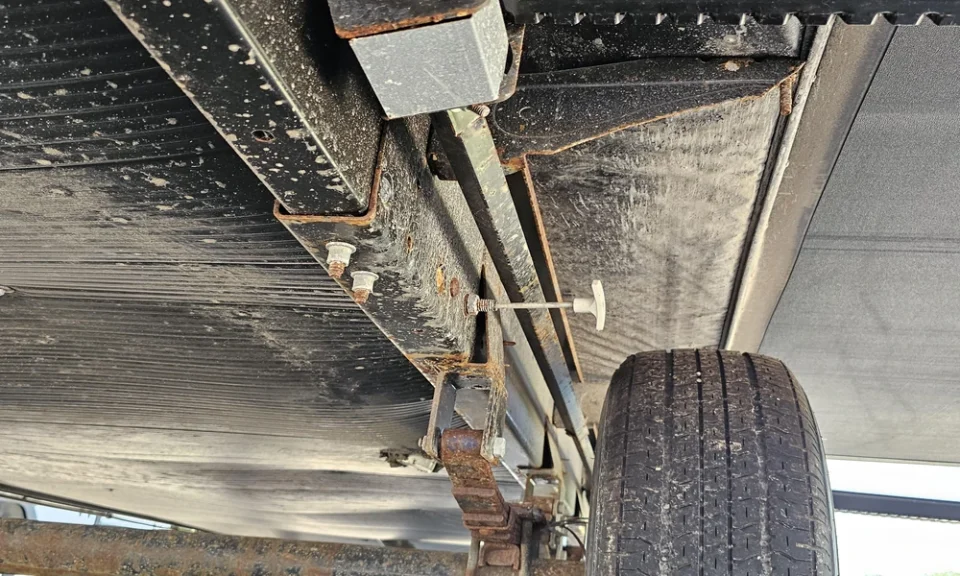
Surface Oxidation Versus Structural Decay: Knowing What You’re Looking At
Rust on a trailer rarely announces itself as one single problem. Some corrosion sits on the surface, dulling paint and leaving orange streaks that look worse than they are. Other rust eats into the steel itself, thinning crossmembers and weakening the welds that hold the frame together. The difference between these two categories determines almost everything about how the repair should proceed, and mixing them up leads owners to either overspend on cosmetic fixes or underestimate a frame that’s quietly failing.
Surface rust typically shows up on wheel wells, fender edges, and anywhere moisture collects after towing through rain or road salt. It can usually be sanded, treated, and repainted without touching the trailer’s load capacity. Deep corrosion behaves differently. It flakes in layers, leaves pitting you can feel with a fingernail, and sometimes creates thin spots where a screwdriver will push through metal that should be solid. Spotting which category applies to a given trailer is the first real decision point, because the two paths diverge sharply from there.
Weighing DIY Treatment Against Professional Frame Work
Once the type of rust is identified, owners generally face three paths: treat it themselves with commercial rust converters, bring it to a mobile welder for patch repairs, or send the trailer to a shop that specializes in full frame restoration. Each option makes sense under different circumstances, and none of them is universally better than the others. A home treatment with a wire wheel and a rust-inhibiting primer can add years to a trailer that only has cosmetic damage, and it costs a fraction of a shop visit. For anyone searching for a clear walkthrough on rusty trailer repair, the process of grinding back compromised metal, treating the exposed surface, and reinforcing weak spots with new steel is well documented and not especially mysterious once you’ve seen it done once.
Where DIY stops being sensible is anywhere structural integrity is in question. Frame rails, axle mounts, and tongue welds carry real load, and a botched patch job there isn’t a cosmetic risk, it’s a safety one. Professional welders bring the ability to cut out compromised sections cleanly and tie new steel into the existing frame with welds rated for the stress a loaded trailer puts on them. Mobile welders tend to be faster and cheaper for isolated repairs, while full-service shops make more sense when rust has spread across multiple structural points and the whole undercarriage needs assessment rather than a single patch.
Matching the Repair Scope to the Trailer’s Remaining Lifespan
The right choice ultimately comes down to what the trailer is worth continuing to invest in. A ten-year-old utility trailer with surface rust and a few years of useful life left doesn’t need the same treatment as a heavy-duty equipment hauler that still has a decade of work ahead of it. Owners sometimes pour money into frame repair on a trailer that was close to retirement anyway, when a more modest fix or a planned replacement would have made more financial sense.
A practical way to approach this is to estimate the cost of repair against the trailer’s replacement value, then factor in how often it’s actually used. A trailer that tows twice a year can tolerate a cheaper, more conservative fix. One that’s on the road weekly hauling heavy loads deserves the more thorough structural inspection, even if it costs more upfront, because the consequences of a missed weak spot are far more serious under constant strain.
Climate matters too, and it’s easy to overlook. Trailers kept in coastal or salt-treated regions corrode faster and more aggressively than those in dry inland climates, which means the same visual amount of rust can represent very different levels of risk depending on where the trailer has spent its life. A trailer that’s been garaged through salted winters needs closer inspection than its appearance alone would suggest.
Once the scope is clear, the decision usually sorts itself out without much agonizing. Light surface rust with a trailer that still has years of service ahead points toward a weekend of sanding and treatment. Deeper corrosion on a trailer that still earns its keep points toward professional repair, done once and done properly, rather than a string of patch jobs that each buy a little more time. The owners who get the best results are the ones who match the fix to the trailer’s actual condition and future, instead of defaulting to whichever option feels easiest in the moment.
